Read what Dilip Amin says, in full
Namaste, this is Dr. Dilip Amin. I am a scientist by training and I have spent 42 years in the pharmaceutical industry. I have also served as Bal Vihar's president, founded the Hindu Speakers Bureau, and have worked with many Hindu organizations. I am also currently a faculty at Hindu University of America.
Some 20 years ago, I recognized a growing need. Many Hindus were entering into interfaith relationships with Christians, Jews or Muslims without fully understanding the religious differences that could affect their marriage and their Hindu heritage. That led me to begin working in this field. Since then I have had the privilege of guiding some 1,300 youths and their families, and I have summarized those experiences in some five books.
See, when two people from completely different faith traditions fall in love, there are important questions that should be asked before marriage. Will there be an expectation of conversion? Will each person practice their faith? What religion will the children be following? And how might these decisions affect the family in the future, including in an unfortunate event of separation or divorce?
As your counselor, I'll help you ask the right questions, understand facts, and make fully informed decisions, rather than making lifelong commitments without understanding possible consequences.
I'm happy to talk with your Abrahamic partner to make sure there is mutual respect and genuine equality of two faiths.
For parents, I can help reduce anxiety and replace the emotional arguments with fact-based, constructive conversations with your adult children. Please reach out to me for guidance. Thank you.
When two people from different faith traditions fall in love, love is only the beginning. Before marriage, it is important to understand how differences in faith may affect conversion, religious practice, children, family expectations, and the future of the marriage.
Dr. Dilip Amin has spent more than twenty years helping young adults and families navigate these difficult questions. The goal is not to tell you whom to marry. It is to help you make an informed decision before you marry.
Four questions every interfaith couple should discuss before marriage:
- Conversion. Will either partner be expected to convert, now or in the future?
- Religious practice. Will each partner be free to practise their own faith? How will holidays, worship, traditions and religious identity be handled?
- Children. What religion, if any, will your children follow? Who will make those decisions?
- Family, separation and divorce. How might religious expectations affect your relationship with both families, and what happens if the marriage later ends?
These conversations can be uncomfortable before marriage. They can become much more difficult after marriage.
Why this guidance
Love brings people together. Understanding helps them build a life together.
Interfaith relationships can be loving, respectful and successful. But couples sometimes discover after marriage that they had very different assumptions about religion, children or family expectations.
The purpose of this service is not to promote one religion over another. It is to create a safe, respectful and fact-based conversation, so that both partners can understand what they are agreeing to.
You don’t have to decide today. You do need to understand the questions.
Are you dating someone from another faith?
You may be deeply in love and still have unanswered questions. Perhaps you have never discussed:
- Whether conversion is expected
- How each of you will practise your religion
- What religious traditions your children will follow
- How your families will respond
- What happens if you disagree later
You don’t need someone to tell you whether your relationship is right or wrong. You need an opportunity to think through the consequences together.
Come together, or start on your own
You can begin the conversation by yourself, and you can invite your partner to join later. Dr. Amin is happy to speak with the Abrahamic partner as well.
The purpose is not to persuade either partner to change their faith. It is to encourage mutual respect, honest discussion, religious freedom and informed choice, which matters most when two people hold different assumptions about marriage, family and children.
Worried about your adult child’s interfaith relationship?
Many parents feel fear, anxiety or uncertainty when a son or daughter falls in love with someone from another religious tradition. Arguments rarely solve the problem.
Fear
replaced with understanding
Arguments
replaced with conversation
Assumptions
replaced with facts
Pressure
replaced with informed choice
Dr. Amin can help parents think through how to have a constructive conversation with their adult child, without damaging the relationship.
What this service is, and what it is not
This is
- Education and guidance
- Question-based discussion
- Exploration of religious and family expectations
- Help preparing for difficult conversations
- Support for informed decision-making
This is not
- An attempt to tell you whom to marry
- An attempt to convert either partner
- Therapy or mental-health treatment
- A substitute for legal advice
- A guarantee that your relationship will succeed
The decision remains yours.
A neutral conversation, with specialised experience
Dr. Amin brings a particular perspective from working extensively with Hindu–Abrahamic relationships. At the same time, the purpose of the conversation is not to attack Christianity, Judaism, Islam or Hinduism.
The goal is to help both people understand one question: what are we each expecting from this marriage? That simple question can reveal issues couples might otherwise discover years later.
Who can book
- Individually, if you are dating or considering marriage with someone from another faith.
- As a couple, if both partners want to discuss the issues together.
- As a parent, if you want help approaching your adult child’s relationship constructively.
- On your own first, inviting your partner to a later session.
Service disclaimer
This service provides educational and personal guidance regarding interfaith relationships. It is not psychological therapy, medical care, legal advice or religious conversion counselling.
Your provider
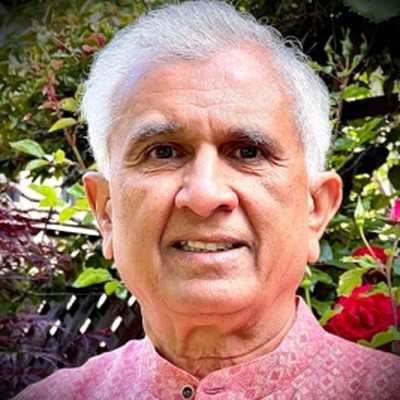
Dilip Amin, PhD
Founder, InterfaithShaadi.org · HSCI Karma Yoga Honoree
Some twenty years ago he recognised that Hindus were entering interfaith relationships without fully understanding the religious differences that could affect their marriage. He has since guided around 1,300 young adults and their families, and written five books on the subject. Full profile
Every provider on this site is invited by the HSCI Board. They are the Institute’s own instructors and officials, offering these wellness sessions as an extension of the Institute’s work.
Choose your package
Explore
$150
single session · 60 minutes
Prepare
$275
two sessions · 60 minutes each · save $25
Deep Conversation
$375
three sessions · 60 minutes each · save $75
Terms of service
Agree to the terms and sign above to continue.
Secure checkout by Stripe. After payment, an HSCI coordinator contacts you within one business day to schedule.
Coaching, not therapy. If you are in crisis, please call 988.